




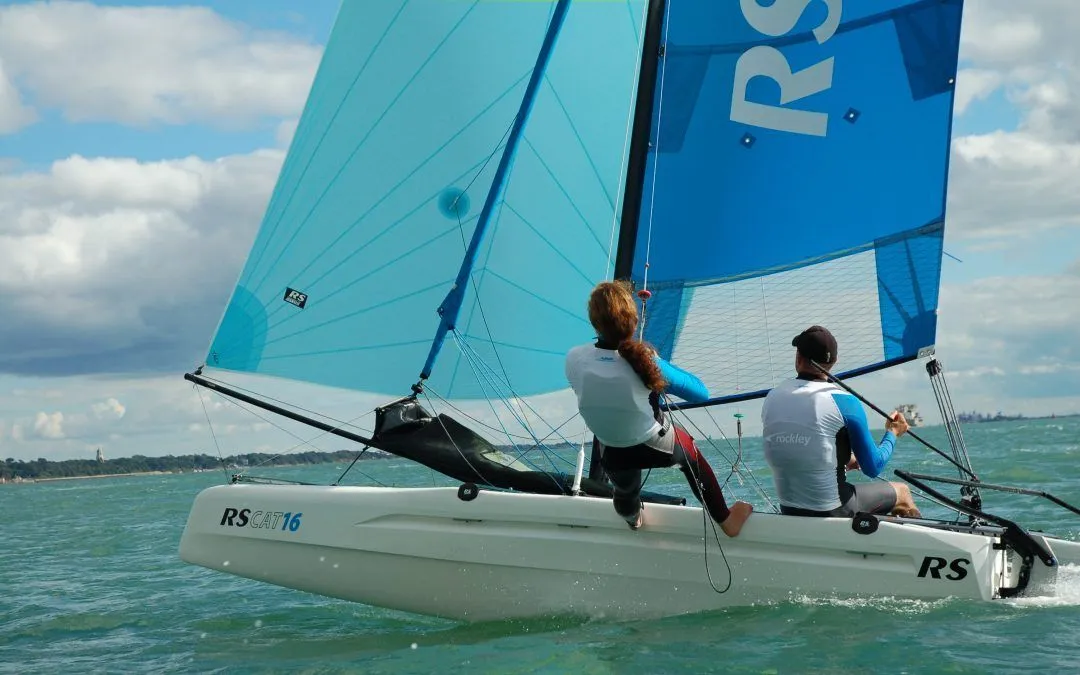
Catamarans for families, sailing schools and hire…
Easy to sail and built to last, these catamarans are aimed primarily at sailing schools, beach clubs and family leisure sailing. One of their great strengths is their load capacity which, in the case of the RS Cat16, is up to 5 people.
The RS Sailing polyethylene catamarans come in lengths of 12, 14 and 16 feet.
Like all 3-layer rotomoulded polyethylene boats, they are tough and virtually maintenance-free. While that is already a major advantage in itself, the RS Cat16, RS Cat14 and RS Cat12 catamarans incorporate a number of design features that improve their performance and reliability.
Below, we look at some of these innovative features.
Connecting crossbeams
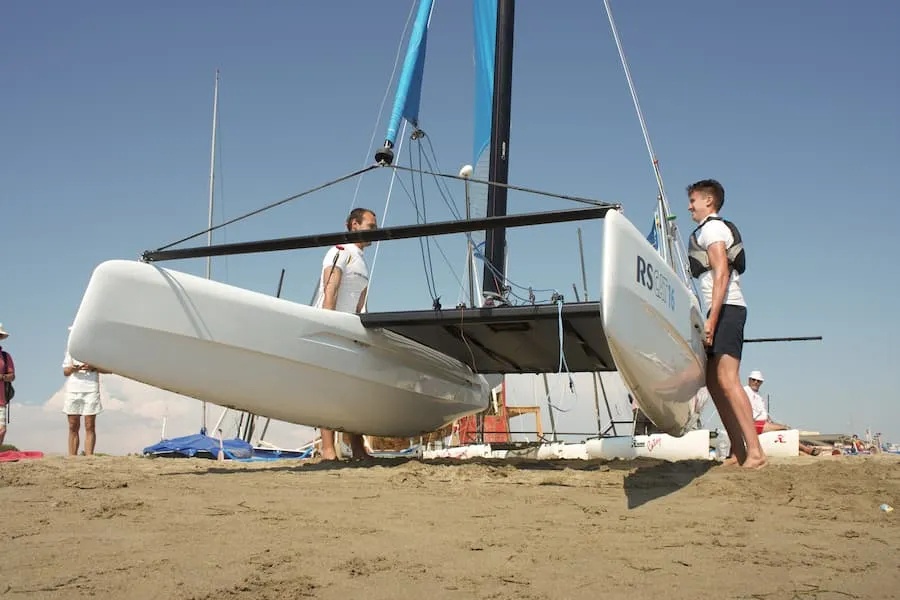
The polyhedral crossbeams that join the hulls “slot” into them, giving the whole structure maximum rigidity. This is essential for the boat to handle well, especially in wind and waves.
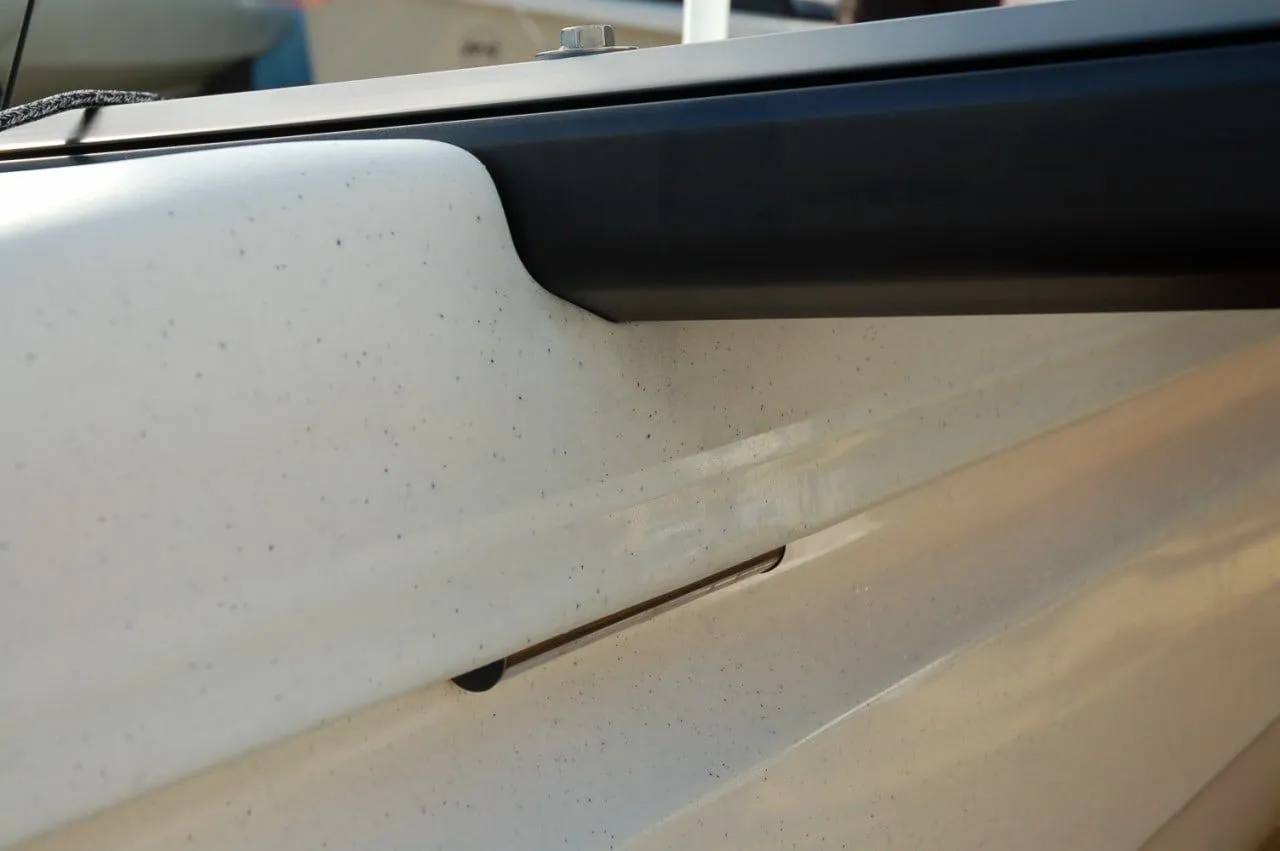
As you can see, the pins that connect the crossbeams to the hulls are on the outside. In other words, there are no holes drilled into the hull through which water could get in. Instead, the pins hold each hull via the gunwales on either side. Access to the pins could not be easier, with the added benefit that assembling and dismantling the boat is simpler when it comes to transporting it or putting it away for the winter.
These gunwales along the full length of the hull also make a perfect handhold.
Decks
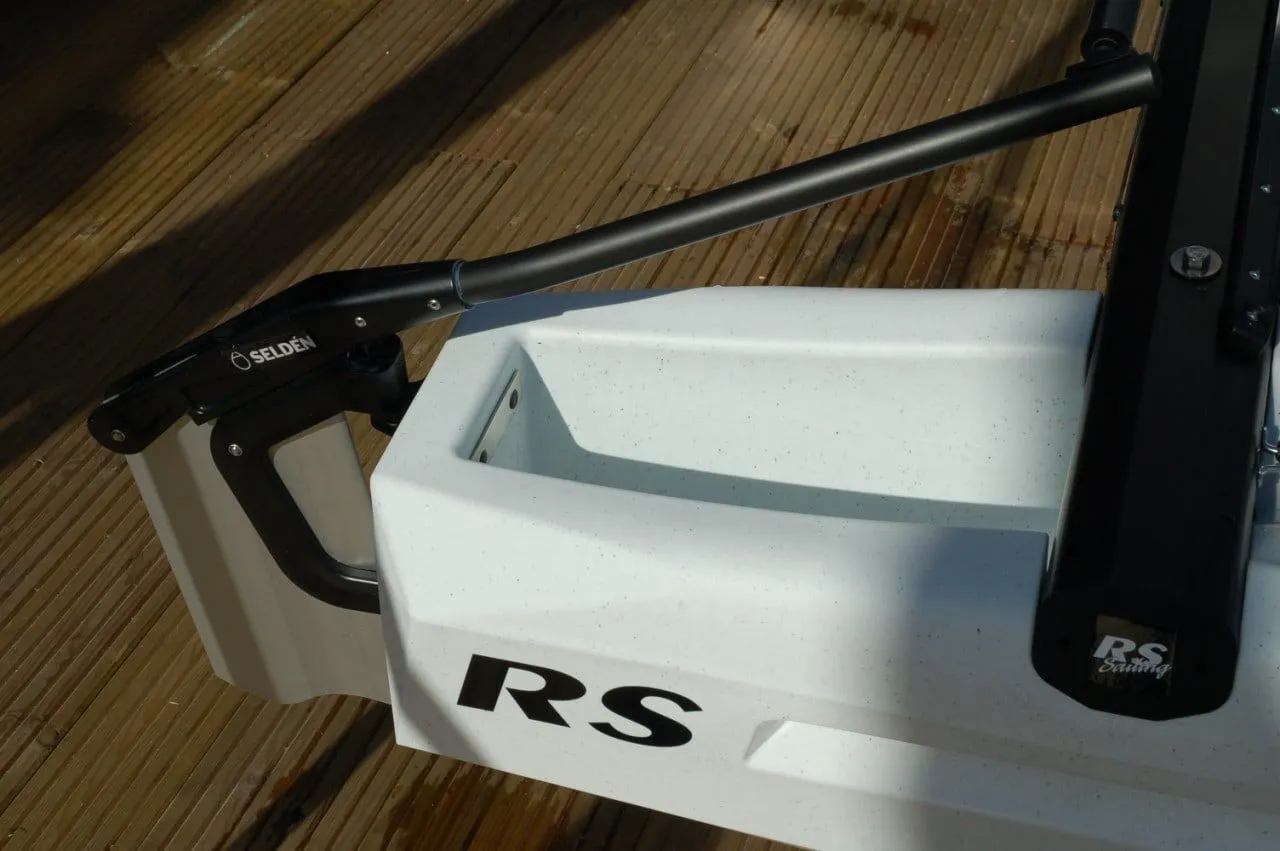
Because the aft section of the hull is open, with no deck, we can reach the rudder fittings from both sides at once. So there is no need to work blind with one arm pushed inside the hull through a hatch…
It also lets us keep the beers cool!
Another reason for this feature is to make righting the boat easier if, when sailing without a masthead float, the boat turns turtle after a capsize. With no deck, we can easily sink the stern and bring the boat from fully inverted to lying on its side at 90º on the water. From there we can easily reach the righting line, which is stowed in a bag under the trampoline, and finish righting the boat by pulling on it.
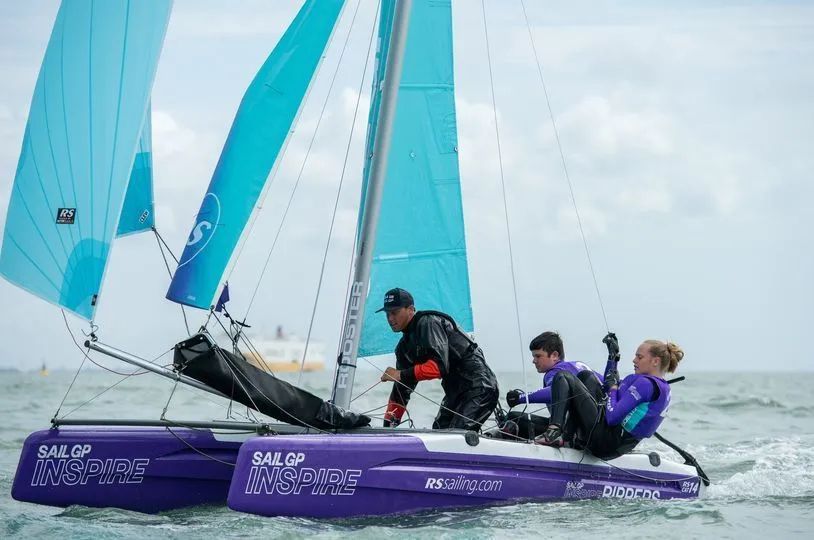
Other features of RS Sailing catamarans…
- Reefing mainsail, furling jib and masthead float as standard.
-
For more dynamic, sporty sailing, the Cat16 and Cat14 can be rigged with twin trapezes and an asymmetric spinnaker (gennaker)
- Replaceable bow bumpers, ideal for keeping these multihulls in pristine condition even under intensive use by schools and hire centres.
- Unsinkable. Like other rotomoulded polyethylene boats from RS Sailing, these catamarans are unsinkable. This means that, even if both hulls were flooded, the polyethylene sandwich provides enough volume for them to keep positive buoyancy.
- An effective system for tensioning the trampolines easily.
-
Concave seating on the hulls for greater comfort.
The hallmarks of RS Sailing catamarans are durability, comfort and fun. The huge impact these catamarans have made in places such as France, the home of multihull sailing, is transforming the way sailing is taught and learnt.